
By BY STEVE LOHR from NYT Technology https://ift.tt/3ihq9aQ




Go to Blogger edit html and find these sentences.Now replace these sentences with your own descriptions.This theme is Bloggerized by Lasantha Bandara - Premiumbloggertemplates.com.

Go to Blogger edit html and find these sentences.Now replace these sentences with your own descriptions.This theme is Bloggerized by Lasantha Bandara - Premiumbloggertemplates.com.

Go to Blogger edit html and find these sentences.Now replace these sentences with your own descriptions.This theme is Bloggerized by Lasantha Bandara - Premiumbloggertemplates.com.

Go to Blogger edit html and find these sentences.Now replace these sentences with your own descriptions.This theme is Bloggerized by Lasantha Bandara - Premiumbloggertemplates.com.

Go to Blogger edit html and find these sentences.Now replace these sentences with your own descriptions.This theme is Bloggerized by Lasantha Bandara - Premiumbloggertemplates.com.

DeepSpin, a Berlin-based startup that is developing what it describes as a “next-generation, AI-powered MRI imaging machine”, has raised €600,000 in seed funding.
Backing the round is APEX Digital Health, with participation from existing investors Entrepreneur First (EF) and SOSV, along with a number of unnamed angel investors. Including grants and earlier investment, it brings the total raised to €1 million pre-launch.
DeepSpin is a graduate of EF’s company builder programme, where its two founders — Clemens Tepel, a former McKinsey consultant, and Pedro Freire Silva, a PhD researcher from KIT — decided to partner in September 2019. Freire Silva drew on his research into small-scale, mass-manufacturable MRI systems and pitched the idea to his future co-founder.
“From the beginning I found the idea very intriguing and so we directly jumped into attempting to prove its feasibility,” says Tepel. “Within 4 weeks we were able to prove it in simulation, get industry-leading advisors on board and get first LOIs [letter of intent] from interested clinicians”.
Yet-to-launch and still in the development phase, DeepSpin aims to build a new type of MRI system at a “fraction of the cost, weight and size” of existing systems. To make this possible, the startup is has developed a new antenna technology combined with AI-controlled operation, which the startup is currently patenting.
“The problem we are solving is that MRI, the most advanced medical imaging method, is currently not easily accessible because it is incredibly expensive, requires specialised operators and needs specifically shielded rooms,” explains Tepel. “We are removing all of these constraints based on our proprietary technology, making MRI universally accessible for any patient, anywhere in the world”.
Adds Freire Silva: “Instead of combining highly expensive hardware with standard software, as it is done on conventional MRI scanners, we will be able to obtain the same clinical information by applying very sophisticated algorithms on simplified hardware, thereby reducing our system’s cost by orders of magnitude”.
Tepel tells me this approach has not been taken before because both key enablers — highly capable AI-algorithms and the specific antenna design – were only available very recently.
Having proven DeepSpin’s methods in simulation, the next step and the team’s current focus is to develop a first fully AI-driven prototype. “Based on that, we will develop an initial product version, aimed at pre-clinical applications, before going into medical certification, which then will allow us to sell our product for clinical use across a range of medical domains and to new geographies that can’t afford conventional systems,” says Tepel.


Covid-19 has been disruptive and bewildering for everyone, but especially for children. In the UK and in most US states, schools closed in March. Many of them will keep their doors shut until the fall. That’s six months without the normality of a school day, not to mention a significant break without any formal education for the many children who cannot access online classes.
It’s a global issue. Schools have had to close in 191 countries, affecting more than 1.5 billion students and 63 million teachers, according to the United Nations. But in many countries, schools are now cautiously reopening: in Germany, Denmark, Vietnam, New Zealand, and China, children are mostly back behind their desks. These countries all have two things in common: low levels of infection and a reasonably firm ability to trace outbreaks.
What about the UK or the US, where the number of cases is relatively high and tracing systems are still in the early stages? How will we know when it’s safe for children to return? There can never be a cast-iron guarantee. But for parents to be able to gauge the level of risk, there are three questions that need answering. How susceptible are children to covid-19? How badly does it affect them? And do they spread it to others?
We know that children are less likely to catch the coronavirus than adults. They’re about half as likely, to be precise, according to a recent study by the London School of Hygiene & Tropical Medicine (LSHTM) using data from China, Italy, Japan, Singapore, Canada, and South Korea, published in Nature Medicine. A survey of 149,760 people with covid-19 by the US Centers for Disease Control and Prevention found that children 17 and under, who make up 22% of the US population, account for fewer than 2% of confirmed infections across the United States.
These findings were supported by a meta-analysis of 18 studies carried out by researchers at University College London, which found that under-18s were 56% less likely to catch coronavirus from an infected person than adults. On the flip side, children are likely to have more close contact with others than adults do, especially in a school, which could potentially mitigate the protective benefit they get from being less likely to catch the virus in the first place. Even so, the numbers look promising.
If children do become infected in spite of this, how badly does it affect them?
The LSHTM study suggests that when children catch covid-19, they usually get very mild effects. Only one in five of those aged 10-19 had any clinical symptoms, compared with 69% of adults over 70. Children are extremely unlikely to die from coronavirus: during the peak nine weeks of the pandemic in England and Wales, just five children 14 and under died, out of a population of almost 11 million in that age group, according to official data analyzed by David Spiegelhalter, a statistician at Cambridge University. A preprint in the journal Public Health found that across seven countries up to May 19, there were 44 covid-19 deaths out of over 137 million children 19 and under. That’s a rate of less than 1 in 3 million. There is an unpleasant new covid-linked inflammatory syndrome in children similar to Kawasaki disease, but it’s extremely rare. “I think there have been fewer than 500 cases reported worldwide,” says Tina Hartert, a medicine professor at the Vanderbilt Institute for Infection, Immunology, and Inflammation in Nashville, Tennessee. The message seems to be that parents should not worry unduly about what might happen to their kids should they catch the virus.
The final crucial question: to what extent do children spread the coronavirus once infected? “If you look at the peer-reviewed literature, it’s very mixed. The simple answer is we don’t know,” says Jeffrey Shaman, an infectious diseases expert at Columbia University. A nine-year-old boy with coronavirus in the French Alps in February did not transmit the virus to anyone else despite exposure to more than 170 people, including close contact within schools. However, we shouldn’t read too much into a study of one. On the other hand, researchers from Berlin University tested 3,712 covid-19 patients, 127 of whom were under 20, and concluded that children can carry the same viral load as adults, which seems to correlate with infectiousness.
One of the biggest fears is that a child could pick up the coronavirus at school and then bring it home to Grandma. “The risk to the kids is low, and it’s not bad for me or my partner, but I do worry about them going back to school and then seeing my parents,” says Kirsten Minshall, a father of two boys aged 9 and 11 who lives in a seaside town in Kent in the UK.
It is possible for children to introduce covid-19 into their household—a study from China identified three occasions when a child under 10 was the “index case” in a home. But it seems to be rare.
The crux of the issue is data, or more precisely a lack of it. Because children are less likely to catch covid-19, and are likely to have milder symptoms if they do, they are less likely to be seen by doctors or tested. That means high-quality, reliable data on this question is hard to come by.
A large National Institutes of Health–funded study in the US that launched last month should help. It’s going to test nasal swabs from nearly 2,000 families in 10 cities every two weeks. The aim is to work out what role children play in transmission, says Hartert, who is leading the study. Enrollment has just finished, and she expects the first results within weeks.
Population-wide serological surveys—which test for the presence of antibodies against covid-19 in blood samples—will also help plug the data gap. Studies comparing areas where schools have reopened and those where they have not could be hugely helpful, too. If it ends up being the case that children are less susceptible to infection, that suggests closing schools won’t be a very important way to reduce transmission across society, says Rosalind Eggo, an infectious disease modeler at LSHTM, who was involved in the study. However, she warns that it’s tricky to disentangle the closure of schools from all the other actions that were taken at the start of the pandemic.
“It’s very difficult to work out what happened to transmission when schools closed, because that happened at the same time as a lot of other interventions, like a general lockdown, distancing, and increased hygiene,” she says.
But none of this addresses a major group, without which no school can function: teachers.
“Some teachers will be elderly, and there’s no easy answer for them. They’re incredibly high risk,” says Hartert. Many of the schools that have reopened around the world have introduced distancing measures and schedules that minimize contact between school groups.
“I’m less afraid teaching than I am going to the supermarket,” says Marleen Slingenbergh, the head of biology at Alexandra Park School in London, where some schools have reopened for a small proportion of their students. She says that’s because the school has prioritized safety—students have to sanitize their hands between lessons, teachers are required to stay at least two meters away from students at the front of the class, and there are strict “one at a time” bathroom policies, for example.
That said, the majority of students haven’t returned yet. Slingenbergh fears it won’t be possible to maintain the safety measures when school returns in full in September. “With one week on, one week off, it’s possible. When we have 1,600 students, it will be tricky, especially during the changeover between lessons,” she says.
Ultimately, the crucial thing for schools may be their ability to respond flexibly—closely monitoring for any potential outbreaks and quickly closing when necessary.
There is, understandably, a lot of pressure from parents to keep their children safe, and many are still not comfortable with sending them back to school, says Slingenbergh. But most of them recognize it’s a delicate balance. “It’s all about weighing up the risks of covid, the kids getting proper schooling, and looking after their mental health,” Minshall says.
Facebook Avatars, which lets users customize a virtual lookalike of themselves for use as stickers in chat and comments, is now available in India, the social juggernaut’s biggest market by users account.
The American firm said Tuesday it had launched Avatars to India as more social interaction moves online amid a nationwide lockdown in the world’s second largest internet market. The company said Avatars supports a variety of faces, hairstyles, outfits that are customized for users in India.
Avatars’ launch comes to India at the height of a backlash against Chinese apps in the country — some of which have posed serious competition to Facebook’s ever-growing tentacles in Asia’s third-largest economy. On Monday evening, New Delhi ordered to ban TikTok and nearly 60 other apps developed by Chinese firms.
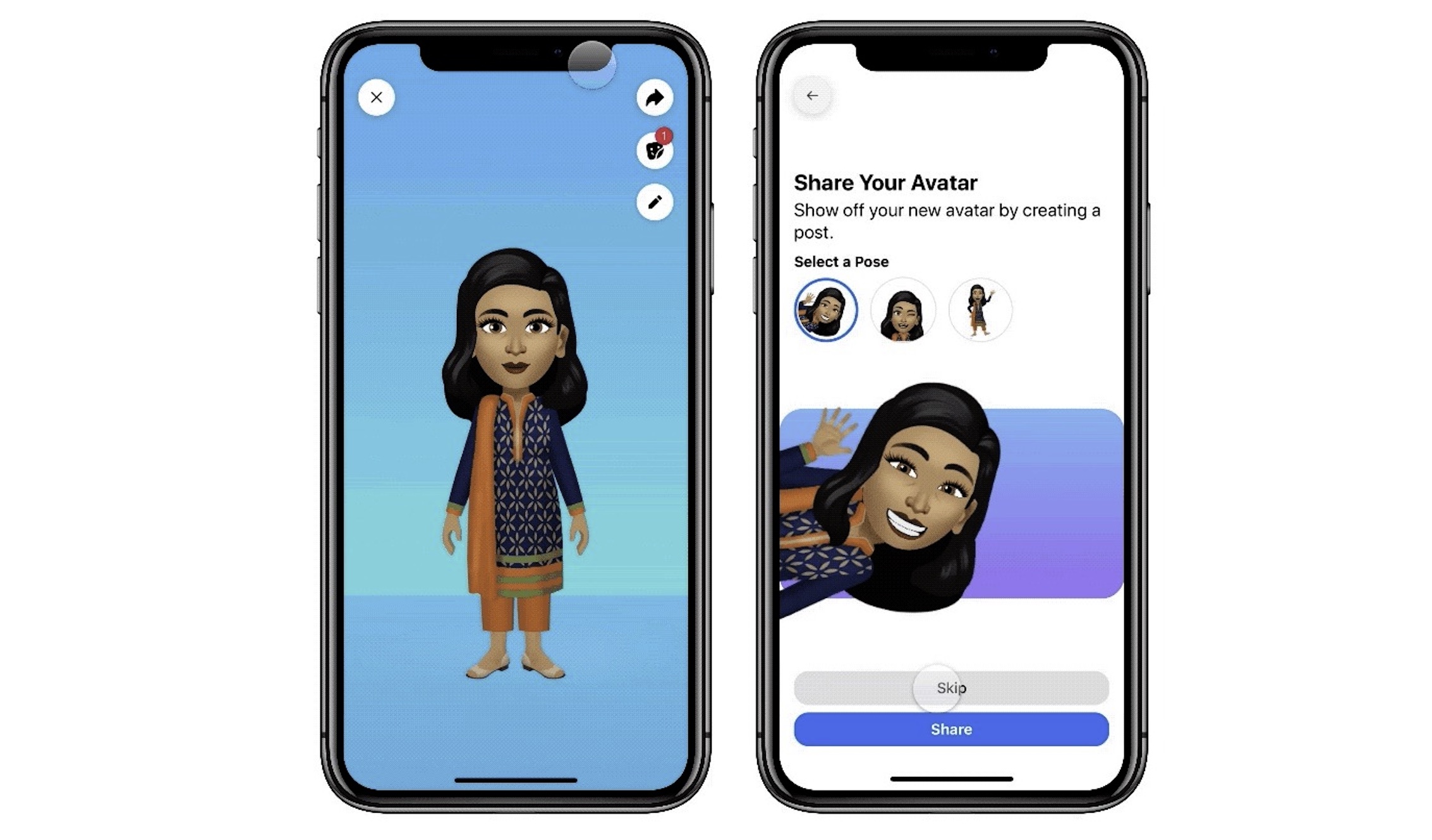
The social giant’s Avatars, a clone of Snapchat’s popular Bitmoji, was first unveiled last year. The feature, which Facebook sees as an expression tool, aims at turning engagements on the social service fun, youthful, visually communicative, and “more light-hearted.”
Users can create their avatar from the sticker tray in the comment section of a News Feed post or in Messenger. Facebook has expanded Avatars, initially available to users in Australia and New Zealand, to Europe and the U.S. in recent weeks.
Scores of companies including Chinese smartphone maker Xiaomi have attempted to replicate Bitmoji in recent years — though no one has expanded it like Snapchat.
Earlier this year, Snapchat introduced Bitmoji TV, a series of 4-minute comedy cartoons with users’ avatars. At the time, Snapchat said that about 70% of its daily active users, or 147 million of its 210 million users, had created their own Bitmojis.
Snapchat is preparing to launch the Spectacles, its AR glasses, in India. The California-headquartered firm has so far struggled to gain ground in India, where it had about 30 million monthly active users last month, according to mobile insights firm App Annie, data of which an industry executive shared with TechCrunch. Facebook has amassed over 350 million users in India and its instant messaging service WhatsApp has more than 400 million users in the country.


As China passes new national security laws for Hong Kong, people are altering their digital footprints or removing their social media posts to avoid detection — Social media users delete posts or alter identities to avoid detection — (Source photos by Reuters and Ken Kobayashi)
You can now tip your Ola driver. The Indian ride-hailing giant said on Tuesday that it has rolled out this feature to its users in India, Australia, New Zealand, and the United Kingdom — all the nations where it currently operates.
Ola said riders in each market will see a range of denominations they can pick as the amount they wish to tip digitally. It plans to allow riders to pay a custom amount of their choice in a few weeks, a spokesperson told TechCrunch.
All of Ola’s 2.5 million driver partners globally — from those who operate two-wheelers to four — can receive tips, the nine-year-old ride-hailing giant said.
The addition of this feature comes as Ola looks to broaden its efforts to help its driver partners who have been financially hit in recent weeks after New Delhi and several other governments across the globe enforced a lockdown to contain the spread of the coronavirus.
Uber first introduced the tipping feature in some states in the U.S. in 2017 and has since expanded to it many more states and nations. It rolled out the tipping feature to its users in India early this year.
Driver partners on both the platforms have long expressed the need for a tipping feature to supplement their incomes after both the companies gradually reduced the incentives they had bandied out in the early years.
“Since the beginning of the pandemic, our driver-partners have worked tirelessly to enable essential travel for all those in need, despite facing their own challenges. As services resume, they continue to personally invest in ensuring the safety of their customers and deliver a comfortable ride experience,” said Anand Subramanian, a spokesperson at Ola.
“Linking rewards to higher-quality services, we invite our customers to join us in sharing our appreciation and supporting them during these trying times. Not only will the new functionality provide an opportunity for drivers to increase their earnings but will also showcase how a small gesture of solidarity and support from customers will drive our driver-partner community to go a long way,” he said.
In recent months, Ola has announced a range of relief packages including exempting lease rental to assist its driver partners. It has also committed to provide driver partners with a few hundred dollars if they or their family members test positive for Covid-19. Uber has yet to offer any significant aid to its driver partners in India.
Like their driver partners, both Ola and Uber have been hit with the global pandemic as well. Ola said last month it was cutting 1,400 jobs, or 35% of its workforce in India. Days later, Uber said it was eliminating 600 jobs, or 25% of its local workforce, in the nation. India is a key overseas market for Uber.
Indian food delivery startups Swiggy and Zomato have also introduced tipping option in their apps in recent months.


The pandemic has wreaked havoc on all manner of professional sports this year, and cycling has not been immune. For example, the best-known race on the planet, the Tour de France, normally staged in July, has had to be pushed back to August 29 through September 20.
That doesn’t mean that the world — and professional cyclists — can’t enjoy world-class racing this summer. In fact, beginning this coming weekend, 23 top men’s teams and 17 women’s teams will participate in a virtual version of the event that’s being hosted by six-year-old Zwift, after it was chosen by the official race organizer of the real tour, Amaury Sport Organization (ASO), as its partner on the event.
It’s a coup for the Long Beach, Calif., company whose multiplayer video game technology is used by both amateur and pro cyclists and that, according to Outside magazine, is now the biggest player in the growing online racing world.
Investors have noticed, funding the company to the tune of $170 million so far, says cofounder and CEO Eric Min.
This Tour has the potential to drive many more users its way, too.
For one thing, the virtual version of the event, which will feature six stages that last roughly hour over the next three weekends beginning this Saturday, will be broadcast in more than 130 countries. (The race gets underway with the first women’s stage, followed immediately by the men, and will be broadcast on NBC Sports here in the U.S.)
It’s hard to imagine another way for a company like Zwift to get so much exposure as quickly.
The race is also open to any cyclists on its platform who want to race on the same roads as the professionals, meaning anyone who wants to “compete” in this virtual tour needs to sign up for an account, though it’s worth noting a few things.
First, mere mortals won’t be racing at the same time as the cyclists in the Tour but during mass participation events during the week that will ostensibly provide them the chance to experience exactly what the pros went through and to compare their power, heart rate, cadence and other data to their pro rider heroes.

Also, Zwift is a subscription service. Users can check out the platform for a free, seven-day trial, but after that, Zwift charges $15 per month. Riders also need a smart trainer, which costs around $300. Zwift doesn’t make its own trainers — yet — but its software works with the hardware of a dozen or so companies.
Unsurprisingly, Min sounded both excited and terrified when we caught up with him last week to talk about the race, whose first two stages will be held in Zwift’s existing game world, Watopia, with the other stages orchestrated in virtual versions of real courses from the race.
Though Zwift has staged virtual races before — including the Giro d’Italia, which is basically the Tour de France for Italy, and the Vuelta a Espana, an annual multi-stage race in Spain — it “doesn’t get any bigger than this,” said Min, who told us the idea was hatched six weeks ago with ASO and that Zwift has been working furiously to prepare for the race ever since.
It could prove a turning point for the outfit. It already has nearly two million accounts, and while subscribers ebb and flow, depending on the time of year, the virtual Tour is an opportunity for some of those riders to “reengage,” Min says, adding that Zwift has been growing 50 percent year over year, and has unsurprisingly seen pick-up accelerate throughout the pandemic.
Zwift doesn’t just cater to competitive athletes, Min stresses, saying that more than half the company’s customers are overweight and that, unlike Peleton, its customers are drawn less to particular instructors and more to the idea of being part of a club where they can train, take part in events, and compete with one another another, either in a public way or by via private rides wherein users share maps with friends, for example.
Either way, both amateur rider and professional racers will undoubtedly have high expectations of the Tour itself, even while it comes with more inherent challenges, including less time to break away from fellow riders than in the real-world tour, where each stage can take five or six hours.
Min thinks Zwift is ready. On our call, he discussed how Zwift convincingly creates drag, for example, walking through the software’s calculations, including a rider’s weight and body mass and the terrain they’re on and whether a rider is receiving draft from riders in front. Apply resistance to the machine or easing it is what gives riders a sense of motion and inertia. “It’s not exactly like outdoor riding,” said Min, but combined with the software’s visual tools, meant to fool the mind, “it gets pretty darn close.
And that software, including the Tour maps, is now largely done, Min said. Now, Zwift just needs to ensure that its broadcast tools work as well as possible, among other last-minute priorities.
“We’ll do some dry runs [this] week. Then it’s showtime,” he said, before adding: “The stakes are pretty high. It has to be rock solid.”


Spotify to launch real-time lyrics feature in 26 markets across Southeast Asia, India and Latin America in partnership with Musixmatch, live on June 30 — Last November, Spotify confirmed it was testing real-time lyrics synced to music in select markets. Tomorrow, the company will announce …

Sources: Uber in talks to buy Postmates for ~$2.6B in a deal that could be announced next week if not sooner — A deal between Uber and the San Francisco-based food-delivery company could be announced next week if not sooner — Uber Technologies Inc. is in discussions to buy Postmates Inc …
Uber has reportedly made an offer to buy food delivery service Postmates, according to The New York Times.
According to the Times, the talks are still ongoing and the deal could fall through.
For those that have been paying attention to Uber, this appetite is not new, albeit consistent. A little over a month ago, the ride-hailing company was reportedly pursuing an acquisition of Grubhub, another food delivery company. Grubhub was ultimately acquired by Just Eat Takeaway in a $7.3 billion deal, but only after the deal with Uber fell through over a variety of concerns.
Food delivery market has set to benefit largely from the COVID-19 pandemic, as stores remain shuttered or switch operations to takeout only. Latest earnings from the public ride-hailing company show that its ride-hailing business is slowing while its food delivery service is growing like hell. Gross bookings for Uber Eats last quarter were $4.68 billion.
So even though Uber still loses a ton of money ($2.94 billion including all costs), its Uber Eats growth is staggering. And the green shoots might be fueling some of this interest in other competitors.
If regulatory concerns were an issue, Postmates may make a better fit.
With a valuation of $2.4 billion, Postmates is significantly smaller than Grubhub. And while the company filed to go public nearly 16 months ago, it held off eventually citing “choppy market” conditions.
So if Uber Eats and Postmates combined, the result would still be smaller than Doordash’s market hold, but would be competitive nonetheless. DoorDash, last valued at $13 billion, confidentially filed for an IPO nearly four months ago.
Also, Postmates delivers more than just food.
If the merger goes through, the food delivery race would get refueled in an interesting way: Uber Eats and Postmates versus Grubhub and Takeaway versus DoorDash .
Postmates declined to comment on rumors or speculation. Uber did not immediately respond to a request for comment.


