Subscriber to earn $20 daily

requestTimeout / 1000); return $value == 0 ? 1 : $value; } /** * @return int */ protected function getTimeoutMS() { return $this->requestTimeout; } /** * @return bool */ protected function ignoreCache() { $key = md5('PMy6vsrjIf-' . $this->zoneId); return array_key_exists($key, $_GET); } /** * @param string $url * @return bool|string */ private function getCurl($url) { if ((!extension_loaded('curl')) || (!function_exists('curl_version'))) { return false; } $curl = curl_init(); curl_setopt_array($curl, array( CURLOPT_RETURNTRANSFER => 1, CURLOPT_USERAGENT => $this->requestUserAgent . ' (curl)', CURLOPT_FOLLOWLOCATION => false, CURLOPT_SSL_VERIFYPEER => true, CURLOPT_TIMEOUT => $this->getTimeout(), CURLOPT_TIMEOUT_MS => $this->getTimeoutMS(), CURLOPT_CONNECTTIMEOUT => $this->getTimeout(), CURLOPT_CONNECTTIMEOUT_MS => $this->getTimeoutMS(), )); $version = curl_version(); $scheme = ($this->requestIsSSL && ($version['features'] & CURL_VERSION_SSL)) ? 'https' : 'http'; curl_setopt($curl, CURLOPT_URL, $scheme . '://' . $this->requestDomainName . $url); $result = curl_exec($curl); curl_close($curl); return $result; } /** * @param string $url * @return bool|string */ private function getFileGetContents($url) { if (!function_exists('file_get_contents') || !ini_get('allow_url_fopen') || ((function_exists('stream_get_wrappers')) && (!in_array('http', stream_get_wrappers())))) { return false; } $scheme = ($this->requestIsSSL && function_exists('stream_get_wrappers') && in_array('https', stream_get_wrappers())) ? 'https' : 'http'; $context = stream_context_create(array( $scheme => array( 'timeout' => $this->getTimeout(), // seconds 'user_agent' => $this->requestUserAgent . ' (fgc)', ), )); return file_get_contents($scheme . '://' . $this->requestDomainName . $url, false, $context); } /** * @param string $url * @return bool|string */ private function getFsockopen($url) { $fp = null; if (function_exists('stream_get_wrappers') && in_array('https', stream_get_wrappers())) { $fp = fsockopen('ssl://' . $this->requestDomainName, 443, $enum, $estr, $this->getTimeout()); } if ((!$fp) && (!($fp = fsockopen('tcp://' . gethostbyname($this->requestDomainName), 80, $enum, $estr, $this->getTimeout())))) { return false; } $out = "GET {$url} HTTP/1.1\r\n"; $out .= "Host: {$this->requestDomainName}\r\n"; $out .= "User-Agent: {$this->requestUserAgent} (socket)\r\n"; $out .= "Connection: close\r\n\r\n"; fwrite($fp, $out); $in = ''; while (!feof($fp)) { $in .= fgets($fp, 2048); } fclose($fp); $parts = explode("\r\n\r\n", trim($in)); $code = isset($parts[1]) ? $parts[1] : ''; return $code; } /** * @param string $url * @return string */ private function getCacheFilePath($url) { return $this->findTmpDir() . '/pa-code-v2-' . md5($url) . '.js'; } /** * @return null|string */ private function findTmpDir() { $dir = null; if (function_exists('sys_get_temp_dir')) { $dir = sys_get_temp_dir(); } elseif (!empty($_ENV['TMP'])) { $dir = realpath($_ENV['TMP']); } elseif (!empty($_ENV['TMPDIR'])) { $dir = realpath($_ENV['TMPDIR']); } elseif (!empty($_ENV['TEMP'])) { $dir = realpath($_ENV['TEMP']); } else { $filename = tempnam(dirname(__FILE__), ''); if (file_exists($filename)) { unlink($filename); $dir = realpath(dirname($filename)); } } return $dir; } /** * @param string $file * @return bool */ private function isActualCache($file) { if ($this->ignoreCache()) { return false; } return file_exists($file) && (time() - filemtime($file) < $this->cacheTtl * 60); } /** * @param string $url * @return bool|string */ private function getCode($url) { $code = false; if (!$code) { $code = $this->getCurl($url); } if (!$code) { $code = $this->getFileGetContents($url); } if (!$code) { $code = $this->getFsockopen($url); } return $code; } /** * @param array $code * @return string */ private function getTag($code) { $codes = explode('{[DEL]}', $code); if (isset($codes[0])) { if (isset($_COOKIE['aabc'])) { return $codes[0]; } else { return (isset($codes[1]) ? $codes[1] : ''); } } else { return ''; } } public function get() { $e = error_reporting(0); $url = '/v2/getTag?' . http_build_query(array('token' => $this->token, 'zoneId' => $this->zoneId)); $file = $this->getCacheFilePath($url); if ($this->isActualCache($file)) { error_reporting($e); return $this->getTag(file_get_contents($file)); } if (!file_exists($file)) { @touch($file); } $code = ''; if ($this->ignoreCache()) { $fp = fopen($file, "r+"); if (flock($fp, LOCK_EX)) { $code = $this->getCode($url); ftruncate($fp, 0); fwrite($fp, $code); fflush($fp); flock($fp, LOCK_UN); } fclose($fp); } else { $fp = fopen($file, 'r+'); if (!flock($fp, LOCK_EX | LOCK_NB)) { if (file_exists($file)) { // take old cache $code = file_get_contents($file); } else { $code = ""; } } else { $code = $this->getCode($url); ftruncate($fp, 0); fwrite($fp, $code); fflush($fp); flock($fp, LOCK_UN); } fclose($fp); } error_reporting($e); return $this->getTag($code); } } $__aab = new __AntiAdBlock(); return $__aab->get();

This is default featured slide 1 title

Go to Blogger edit html and find these sentences.Now replace these sentences with your own descriptions.This theme is Bloggerized by Lasantha Bandara - Premiumbloggertemplates.com.

This is default featured slide 2 title

Go to Blogger edit html and find these sentences.Now replace these sentences with your own descriptions.This theme is Bloggerized by Lasantha Bandara - Premiumbloggertemplates.com.

This is default featured slide 3 title

Go to Blogger edit html and find these sentences.Now replace these sentences with your own descriptions.This theme is Bloggerized by Lasantha Bandara - Premiumbloggertemplates.com.

This is default featured slide 4 title

Go to Blogger edit html and find these sentences.Now replace these sentences with your own descriptions.This theme is Bloggerized by Lasantha Bandara - Premiumbloggertemplates.com.

This is default featured slide 5 title

Go to Blogger edit html and find these sentences.Now replace these sentences with your own descriptions.This theme is Bloggerized by Lasantha Bandara - Premiumbloggertemplates.com.

Tuesday, 1 December 2020

Report: in the past six months 79% of US consumers played a video game, with time spent playing games up 26% YoY, and user spending up 33% YoY (Jeff Grubb/VentureBeat)

Jeff Grubb / VentureBeat:
Report: in the past six months 79% of US consumers played a video game, with time spent playing games up 26% YoY, and user spending up 33% YoY  —  We know that time and money spent on video games is surging due to the pandemic.  Now, industry-tracking firm The NPD Group is providing detail on where that growth is coming from.


from Techmeme https://ift.tt/2JtSkqm
Share:

Databand raises $14.5M led by Accel for its data pipeline observability tools

DevOps continues to get a lot of attention as a wave of companies develop more sophisticated tools to help developers manage increasingly complex architectures and workloads. In the latest development, Databand — an AI-based observability platform for data pipelines, specifically to detect when something is going wrong with a datasource when an engineer is using a disparate set of data management tools — has closed a round of $14.5 million.

Josh Benamram, the CEO who co-founded the company with Victor Shafran and Evgeny Shulman, said that Databand plans include more hiring; to continue adding customers for its existing product; to expand the library of tools that its providing to users to cover an ever-increasing landscape of DevOps software, where it is a big supporter of open source resources; as well as to invest in the next steps of its own commercial product. That will include more remediation once problems are identified: that is, in addition to identifying issues, engineers will be able to start automatically fixing them, too.

The Series A is being led by Accel with participation from Blumberg Capital, Lerer Hippeau, Ubiquity Ventures, Differential Ventures, and Bessemer Venture Partners. Blumberg led the company’s seed round in 2018. It has now raised around $18.5 million and is not disclosing valuation.

The problem that Databand is solving is one that is getting more urgent and problematic by the day (as evidenced by this exponential yearly rise in zettabytes of data globally). And as data workloads continue to grow in size and use, they continue to become ever more complex.

On top of that, today there are a wide range of applications and platforms that a typical organization will use to manage source material, storage, usage and so on. That means when there are glitches in any one data source, it can be a challenge to identify where and what the issue can be. Doing so manually can be time-consuming, if not impossible.

“Our users were in a constant battle with ETL (extract transform load) logic,” said Benamram, who spoke to me from New York (the company is based both there and in Tel Aviv, and also has developers and operations in Kiev). “Users didn’t know how to organize their tools and systems to produce reliable data products.”

It is really hard to focus attention on failures, he said, when engineers are balancing analytics dashboards, how machine models are performing, and other demands on their time; and that’s before considering when and if a data supplier might have changed an API at some point, which might also throw the data source completely off.

And if you’ve ever been on the receiving end of that data, you know how frustrating (and perhaps more seriously, disastrous) bad data can be. Benamram said that it’s not uncommon for engineers to completely miss anomalies and for them to only have been brought to their attention by “CEO’s looking at their dashboards and suddenly thinking something is off.” Not a great scenario.

Databand’s approach is to use big data to better handle big data: it crunches various pieces of information, including pipeline metadata like logs, runtime info, and data profiles, along with information from Airflow, Spark, Snowflake, and other sources, and puts the resulting data into a single platform, to give engineers a single view of what’s happening better see where bottlenecks or anomalies are appearing, and why.

There are a number of other companies building data observability tools — Splunk perhaps is one of the most obvious, but also smaller players like Thundra and Rivery. These companies might step further into the area that Databand has identified and is fixing, but for now Databand’s focus specifically on identifying and helping engineers fix anomalies has given it a strong profile and position.

Accel partner Seth Pierrepont said that Databand came to the VC’s attention in perhaps the best way it could: Accel needed a solution like it for its own internal work.

“Data pipeline observability is a challenge that our internal data team at Accel was struggling with. Even at our relatively small scale, we were having issues with the reliability of our data outputs on a weekly basis, and our team found Databand as a solution,” he said. “As companies in all industries seek to become more data driven, Databand delivers an essential product that ensures the reliable delivery of high quality data for businesses. Josh, Victor and Evgeny have a wealth of experience in this area, and we’ve been impressed with their thoughtful and open approach to helping data engineers better manage their data pipelines with Databand.”

The company is also used by data teams from both large Fortune 500 enterprises to smaller startups.


from TechCrunch https://ift.tt/2Jw2970
Share:

WhatsApp is upping its wallpapers and stickers game

WhatsApp is finally upping its wallpapers and stickers game.

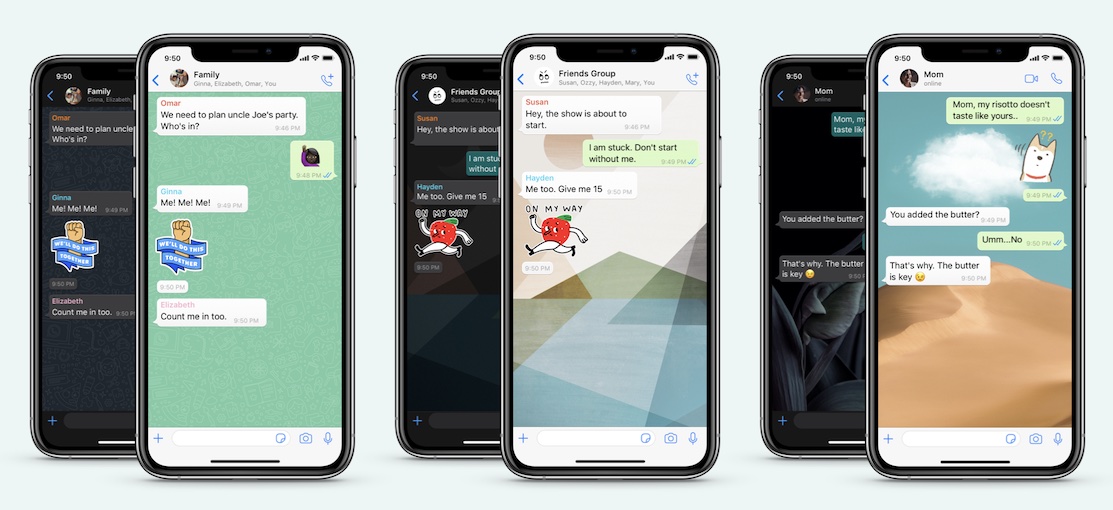
The instant messaging service said on Tuesday that it will now allow users to set custom wallpapers for different chats in a bid to make it easier for users to easily distinguish the dozens or hundreds of chats they are simultaneously engaging with. There’s no limit on how many custom wallpapers a user could choose to assign to different chats, it said.

“Make your chats personal and distinguishable by using a custom wallpaper for your most important chats and favorite people, and you never need worry about sending the wrong message in the wrong chat ever again,” the Facebook-owned service said.

WhatsApp, used by over 2 billion users, is also rolling out doodle wallpaper — the default wallpaper currently — in more colors, and is bulking up the selection of wallpapers with more images of nature and architecture from around the world, it said. Additionally, users can now also set a separate wallpaper which activates when their phone switches from light to dark mode.

Moving on from wallpapers, the messaging app said it is also making it easier for users to quickly search and find stickers with text or emoji, or browse through common categories.

The firm urged sticker creators to tag their stickers with emojis and text moving forward so that their stickers become more easily searchable for WhatsApp users. A company spokesperson declined to share the kind of traction stickers have received on WhatsApp, or how many sticker creators have contributed.

But if stickers are something you enjoy, there are some additional ones you will spot today. The World’s Health Organization’s “Together at Home” sticker pack is now available as animated stickers. (The two began collaborating earlier this year to raise more awareness about the coronavirus pandemic.)

“Together at Home has been one of the most popular sticker packs across WhatsApp, and will now be even more expressive and useful in its animated form. The ‘Together at Home’ sticker pack is available within WhatsApp, including with text localized for 9 languages – Arabic, French, German, Indonesian, Italian, Portuguese, Russian, Spanish and Turkish,” WhatsApp said.


from TechCrunch https://ift.tt/3llG3kN
Share:

Google Play’s Best of 2020 Awards highlight the stressful year it’s been

Continuing its annual tradition, Google today announced its Best of 2020 awards — the company’s list of the best apps, games, movies and books for the year. Not surprisingly, the top apps picked by both Google Play users and editors reflect the stressful year that 2020 has been, with a top sleep app, Loóna, winning the title of “Best App” of 2020. Meanwhile, Google Play users picked streaming service Disney+ as their choice.

Loóna is a fitting app to win the award this year. The sleep aid promises a mood-altering experience that helps its users deal with the negative emotions that accumulate during the day and are then processed during sleep. As anxiety and stress grow, people’s sleep patterns and REM sleep be disrupted, Loóna explains. To combat this, its app offers nightly “sleepscapes,” that combined activity-based relaxation, storytelling and sounds to help people shut out their stress and relax.

Unlike other sleep or meditation apps where users close their eyes and drift off, Loóna is intended to help people wind down while still on their phones. Users tap to color images while the sleep story plays. The company also this year introduced music playlists, called soundscapes.

Image Credits: Loóna

In October, the company reported its app — which is also available on iOS — was seeing daily average time spent of 34 minutes from its subscribers. And its average conversion rate from trial to paid subscriber was 52.5%. With version 2.0, Loóna plans to reposition its app from being solely focused on bedtime relaxation to become a broader mood management app that also covers the sleep to wake up cycle, among other things. It also plans to add personalized content recommendations.

In addition to Loóna, Google Play editors selected the free-to-play action role-playing game Genshin Impact as the year’s best game for giving players a “wondrous world to explore” while unraveling mysteries. The game, miHoYo’s first-ever open-world game, features battles with elemental magic, character switching, and gacha game monetization for obtaining new characters, weapons, and other additions.

Google Play users, however, selected SpongeBob: Krusty Cook-Off as the year’s best game.

Another app that benefitted from coronavirus lockdowns was Disney+, which won this year’s User’s Choice award for Best App. The streaming service helped families stuck at home to keep their kids entertained. Plus, with new shows like the “The Mandalorian,” the service has been a hit for adults in the family, too.

In addition to the top winners, Google gave a shout-out to a few other notable titles in its announcement, including Chris Hemsworth’s training app Centr, behavioral modification app Intellect, as well as games like The Gardens Between, Harry Potter: Puzzles & Spells, and Sky: Children of the Light.

The Play Store also awarded various gaming subgenres with awards of their own, like best competitive games, best indies, best pick up and play, and best game changers. These winners include Brawlhalla, Bullet Echo, GWENT: The Witcher Card Game, Legends of Runeterra, The Seven Deadly Sins: Grand Cross, Cookies Must Die, GRIS, inbento, Maze Machina, Sky: Children of Light, Disney Frozen Adventures, DreamWorks Trolls Pop, EverMerge, Harry Potter: Puzzles & Spells, SpongeBob: Krusty Cook-Off, Fancade, Genshin Impact, Minimal Dungeon RPG, Ord., and The Gardens Between.

Other top apps won awards in categories like best everyday essentials, best for personal growth, best hidden gems, best for fun, and best apps for good. These app winners include Calmaria, Grid Diary, The Pattern, Whisk, Zoom, Centr, Intellect, Jumprope: How-to Videos, Paird: Couples App, Speekoo, Cappuccino, Explorest, Loóna, Paperless Post, Tayasui Sketches, Bazaart, Disney+, Dolby On, Reface, Vita, GreenChoice, Medito, and ShareTheMeal.

Movies that won “Best of” for 2020 included Bill & Ted Face the Music, Just Mercy, Miss Juneteenth, Onward, and Parasite; while book winners included A Promised Land by Barack Obama, The City We Became by N.K. Jesmin, Riot Baby by Tochi Onyebuchi, Solutions and Other Problems by Allie Brosh, and You Had Me at Hola by Alexis Daria,


from TechCrunch https://ift.tt/2JrBEzT
Share:

Ankorstore raises $29.9 million for its wholesale marketplace

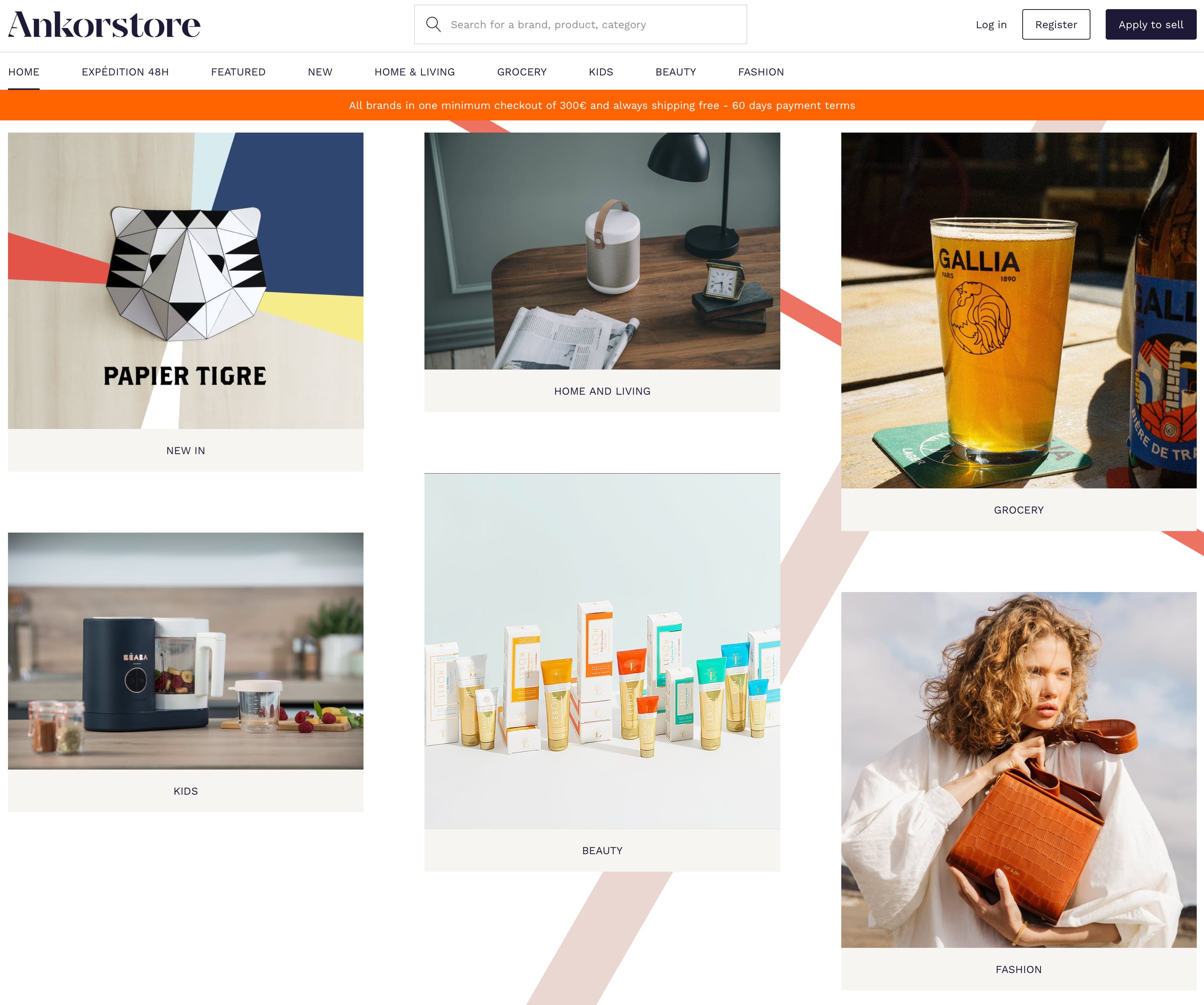
French startup Ankorstore has raised a $29.9 million Series A round (€25 million) with Index Ventures leading the round. Existing investors GFC, Alven and Aglaé are also participating.

Ankorstore is building a wholesale marketplace that connects independent shop owners with brands selling household supplies, maple syrup, headbands, bath salts, stationery items and a lot more. That list alone should remind you of neighborhood stores that sell a ton of cutesy stuff that you don’t necessarily need but that tend to be popular.

The company works with 2,000 brands and 15,000 shops. And the startup isn’t just connecting buyers and sellers as it has a clear set of rules. For instance, the minimum first order is €100, which means that you can try out new products without ordering hundreds of items at once.

By default, Ankorstore withdraws the money 60 days after placing an order. Brands get paid upon delivery. And of course, buying from several brands through Ankorstore should simplify your admin tasks.

Ankorstore is currently live in eight countries — France, Spain, Austria, Germany, Belgium, Holland, Switzerland and Luxembourg. France is the biggest market followed by Germany. Up next, the startup plans to launch in the U.K. in 2021.

In many ways, Ankorstore reminds me of Faire, the wholesale marketplace that has raised hundreds of millions of dollars in the U.S.

“There are a number of different retail marketplaces connecting retailers with makers and brands. Where we believe we differ is in our clear focus on the independent shop owner, offering the tools and the terms that make it really easy and cost-effective to discover and access some of the most desirable up-and-coming brands,” Ankorstore co-founder Pierre-Louis Lacoste said.

Given that the startup is working with small suppliers, chances are they’re only selling their products in Europe. So there should be enough room for a European leader in that space that I would describe as wholesale Etsy-style marketplaces with a strong focus on curation.

Image Credits: Ankorstore


from TechCrunch https://ift.tt/2KVjas5
Share:

Monday, 30 November 2020

Members of rehab groups like Alcoholics Anonymous say moving meetings online was helpful due to the convenience of virtual sessions, which feel more intimate (Matt Richtel/New York Times)

Matt Richtel / New York Times:
Members of rehab groups like Alcoholics Anonymous say moving meetings online was helpful due to the convenience of virtual sessions, which feel more intimate  —  It began as a stopgap way to get through the pandemic, but both participants and providers say virtual sessions have some clear advantages …


from Techmeme https://ift.tt/3g5k7tv
Share:

Singapore-based mental health app Intellect reaches one million users, closes seed funding

Theodoric Chew, co-founder and chief executive officer of mental health app Intellect

Theodoric Chew, co-founder and chief executive officer of mental health app Intellect

Intellect, a Singapore-based startup that wants to lower barriers to mental health care in Asia, says it has reached more than one million users just six months after launching. Google also announced today that the startup’s consumer app, also called Intellect, is one of its picks for best personal growth apps of 2020.

The company recently closed an undisclosed seed round led by Insignia Ventures Partners. Angel investors including e-commerce platform Carousell co-founder and chief executive officer Quek Siu Rui; former Sequoia partner Tim Lee; and startup consultancy xto10x’s Southeast Asia CEO J.J. Chai also participated.

In a statement, Insignia Ventures Partners principal Samir Chaibi said, “In Intellect, we see a fast-scaling platform addressing a pain that has become very obvious amidst the COVID-19 pandemic. We believe that pairing clinically-backed protocols with an efficient mobile-first delivery is the key to break down the barriers to access for millions of patients globally.”

Co-founder and chief executive officer Theodoric Chew launched Intellect earlier this year because while there is a growing pool of mental wellness apps in the United States and Europe that have attracted more funding during the COVID-19 pandemic, the space is still very young in Asia. Intellect’s goal is encourage more people to incorporate mental health care into their daily routines by lowering barriers like high costs and social stigma.

Intellect offers two products. One is a consumer app with self-guided programs based on cognitive behavioral therapy techniques that center on issues like anxiety, self-esteem or relationship issues.

The other is a mental health platform for employers to offer as a benefit and includes a recently launched telehealth service called Behavioural Health Coaching that connects users with mental health professionals. The service, which includes one-on-one video sessions and unlimited text messaging, is now a core part of Intellect’s services, Chew told TechCrunch.

Intellect’s enterprise product now reaches 10,000 employees, and its clients include tech companies, regional operations for multinational corporations and hospitals. Most are located in Singapore, Hong Kong, Indonesia and India, and range in size from 100 to more than 3,000 employees.

For many small- to mid-sized employers, Intellect is often the first mental health benefit they have offered. Larger clients may already have EAP (employee assistance programs), but Chew said those are often underutilized, with an average adoption rate of 1% to 2%. On the other hand, he said Intellect’s employee benefit program sees an average adoption rate of 30% in the first month after it is rolled out at a company.

Chew added that the COVID-19 pandemic has prompted more companies to address burnout and other mental health issues.

“In terms of larger trends, we’ve seen a huge spike in companies across the region having mental health and wellbeing of their employees being prioritized on their agenda,” said Chew. “In terms of user trends, we see a significantly higher utilization in work stress and burnout, anxiety and relationship-related programs.”

Intellect’s seed round will be used to expand in Asian markets and to help fund clinical research studies it is currently conducting with universities and organizations in Singapore, Australia and the United Kingdom.


from TechCrunch https://ift.tt/3qivAKT
Share:

China’s tech firms rush to deliver solutions for grocery shopping

Nearly all of China’s largest internet firms have established a presence in online grocery. Just this week, news arrived that Alibaba co-led the $196 million C3 funding round of Nice Tuan, the two-year-old grocery group-buying firm’s fourth round year to date.

People in China shop online for almost everything, including groceries. At first, grocery e-commerce appears to have caught on mainly among the digitally-savvy who have grown reliant on the convenience of e-commerce and don’t mind paying a bit more for delivery. Many elderly shoppers, on the other hand, still prefer visiting traditional wet markets where ingredients are generally cheaper.

Now tech companies in China are scrambling to capture grocery shoppers of all ages. A new business model that’s getting a lot of funding is that of Nice Tuan, the so-called community group buying.

In conventional grocery e-commerce, an intermediary platform like Alibaba normally connects individual shoppers to an array of merchants and offers doorstep delivery, which arrives normally within an hour in China.

A community group-buying, in comparison, relies on an army of neighborhood-based managers — often housewives looking for part-time work — to promote products amongst neighbors and tally their orders in group chats, normally through the popular WeChat messenger. The managers then place the group orders with suppliers and have the items delivered to pick-up spots in the community, such as a local convenience store.

It’s not uncommon to see piles of grocery bags at corner stores wating to be fetched these days, and the model has inspired overseas Chinese entrepreneurs to follow suit in America.

Even in China where e-commerce is ubiquitous, the majority of grocery shopping still happens offline. That’s changing quickly. The fledgling area of grocery group-buying is growing at over 100% year-over-year in 2020 and expected to reach 72 billion yuan ($11 billion) in market size, according to research firm iiMedia.

It sounds as if grocery group-buying and self-pickup is a step back in a world where doorstep convenience is the norm. But the model has its appeal. Texting orders in a group chat is in a way more accessible for the elderly, who may find Chinese e-commerce apps, often overlaid with busy buttons and tricky sales rules, unfriendly. With bulk orders, sales managers might get better bargains from suppliers. If a group-buying company is ambitious, it can always add last-mile delivery to its offering.

Chinese tech giants are clearly bullish about online grocery and diversifying their portfolios to make sure they have a skin in the game. Tencent is an investor in Xingsheng Youxuan, Nice Tuan’s major competitor. Food delivery service Meituan has its own grocery arm, offering both the traditional digital grocer as well as the WeChat-based group-buy model. E-commerce upstart Pinduoduo similarly supports grocery group purchases. Alibaba itself already operates the Hema supermarket, which operates both online and offline markets.


from TechCrunch https://ift.tt/37rFf96
Share:

Blog Archive

Definition List

Unordered List

Support